
Safety nets
Safety nets and working platforms: what each one does
Safety nets and working platforms are both used to protect builders working at height on New Zealand sites. They work in different ways and sit at different steps of the hierarchy of controls. This page sets out what each one does and what WorkSafe's guidance says.
What a safety net is and how it works
A construction safety net is rigged below the work area. If someone falls, the net catches them and absorbs the energy of the fall. WorkSafe describes them this way: "Safety nets are collective fall arrest systems, not fall restraint systems. That is, they provide passive protection from falls while allowing people to work at height without restricting their movement."
There is no New Zealand Standard for safety nets. WorkSafe's guidance says: "There are no New Zealand Standards for using safety nets as fall arrest systems, so this guide follows the test methods, installation procedures and safety net positioning limits described in the following British and European codes of practice and standards: BS 8411, BS EN 1263-1, BS EN 1263-2."
What WorkSafe's guidance expects of a safety net installation
- Fall height. For nets over 35m² with a shortest side of at least 5.0 metres, a maximum fall height into the net of 6.0 metres. Within 2.0 metres of the net's outer edges, the fall height should be no more than 3.0 metres.
- Anchor points. No more than 2.5 metres apart under BS EN 1263-2. WorkSafe recommends 1.5 to 2.0 metre centres.
- Inspection. Regular visual inspections, including daily, weekly and after bad weather. Nets more than 12 months old must carry a current test tag or label.
- Trained installers. Nets "should only be dismantled by trained installers who can identify and mark net damage."
What a working platform is
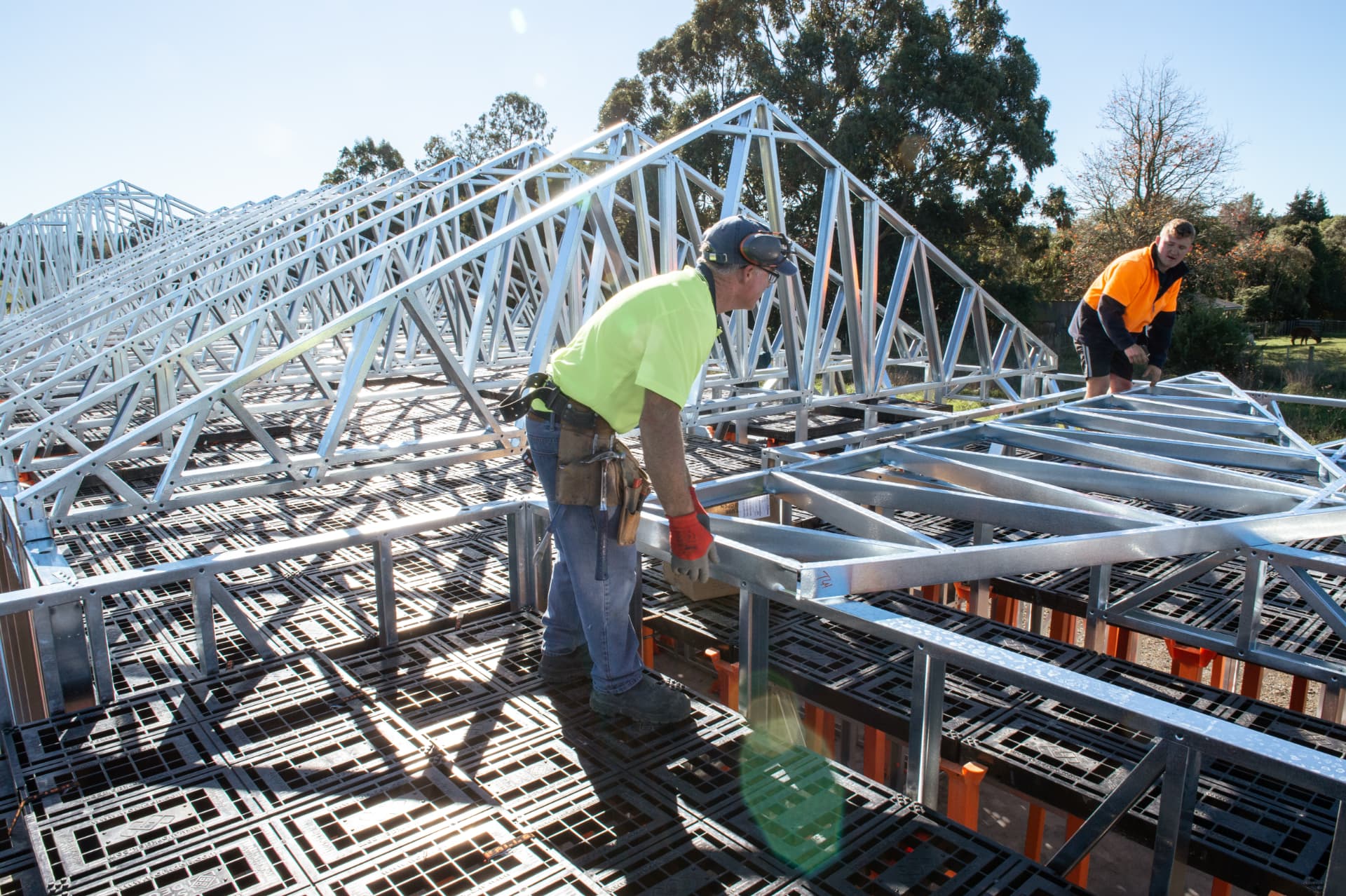
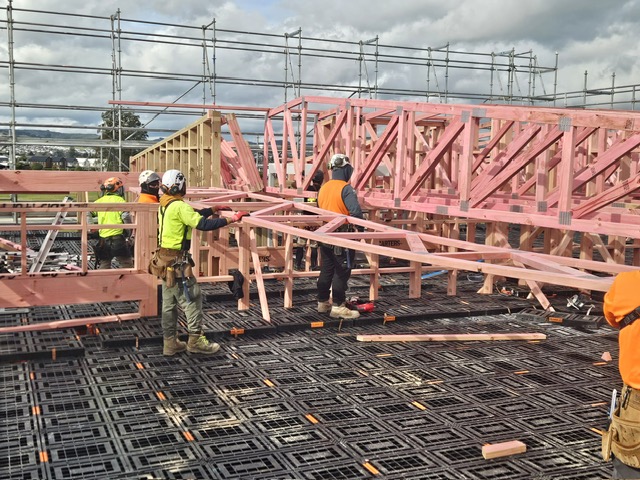
A working platform gives the crew a continuous, level floor at the height they're working. They stand on a deck rather than working above an open drop, so the fall is prevented rather than arrested. Workdek is a modular working platform hired to New Zealand builders.
The specifications are on How it works.
Where each sits in the hierarchy of controls
The hierarchy of controls puts prevention before arrest. A working platform sits at the prevention step; a safety net sits at the arrest step. Both are collective protection: they protect everyone working above them without relying on what each person wears.
The full explanation is on Why it works.
The independent assessment and project-by-project findings are on Why it works.
Workdek also partnered with CHASNZ on ergonomics research. Builders reported better posture, less back strain and lower fatigue working from a platform.
The research is on Why it works.
When nets are the right choice, and when a platform suits better
Safety nets are a well-established, standards-based fall arrest system, and they remain the right control on many sites. A Workdek platform is built up from the floor below, so where there's no sound floor to build from, a platform isn't an option and nets may be the better control.
A working platform suits work done from a floor level: truss installation and roof framing, mid-floor construction, and fixing and lining at height.
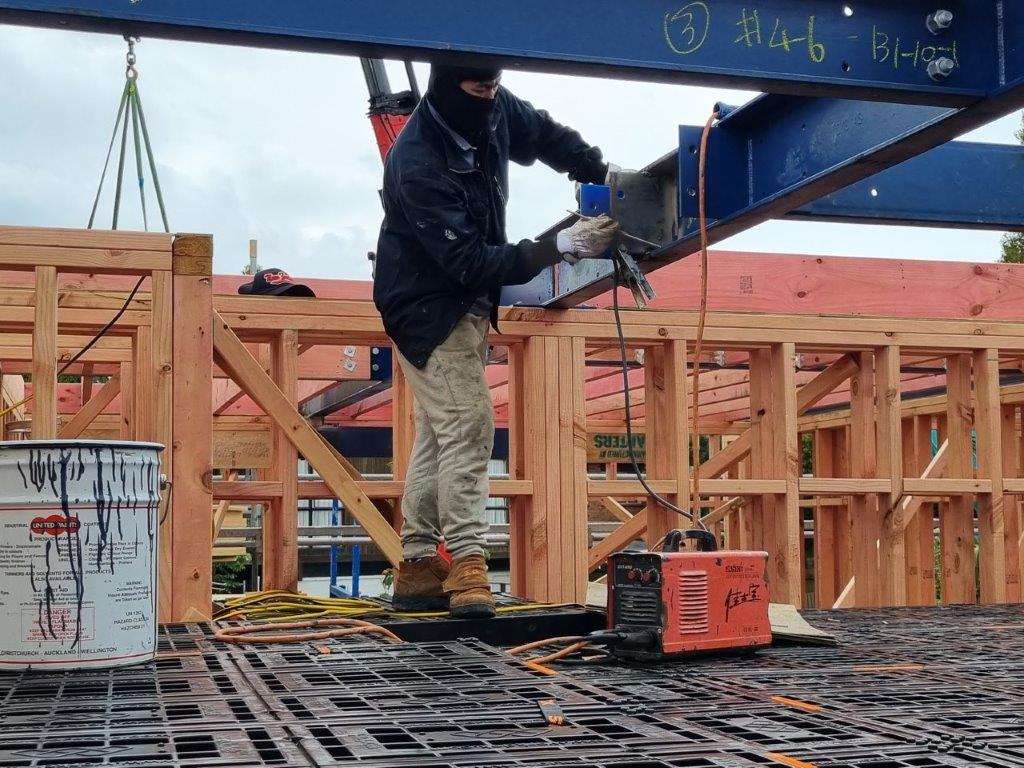
The applications are on How it works.
Using both on the same build
The two aren't exclusive. A platform inside the building for framing and fixing can work alongside other controls elsewhere on the site, such as scaffold, edge protection and roofing controls. For roofers, WorkSafe's Best Practice Guidelines for Working on Roofs cover eliminating falls through design: for example, purlins at 450mm centres instead of 900mm, or safety mesh.
- WorkSafe — Best Practice Guidelines for Working on Roofs
WorkSafe New Zealand's best practice guidelines for working on roofs, including section 4 on eliminating falls through design and section 7.7 on safety mesh.
PDF · 2.2 MB
Common questions
- Are safety nets required in New Zealand?
- No rule says nets specifically must be used. Under the Health and Safety at Work Act 2015, PCBUs must manage fall risks from any height, in the order set by the hierarchy of controls. Nets, working platforms, scaffold and edge protection are all recognised controls. The right one depends on the job. Working at height.
- Do I still need nets if I hire a working platform?
- It depends on the other fall risks on your site. A working platform protects the crew working from it. Other risks, such as roof edges, scaffold and openings elsewhere, still need their own controls, which your site safety plan should set out.
- What standard do safety nets meet?
- There is no New Zealand Standard. WorkSafe's guidance follows BS 8411 and BS EN 1263 parts 1 and 2.
- Who inspects safety nets?
- WorkSafe's guidance calls for regular visual inspections, including daily, weekly and after bad weather. Nets more than 12 months old must carry a current test tag or label.
Tell us about your build.
Send us your plans and some details of the build, and one of the team will come back to you with a quote.