
Working at height
Working at height in New Zealand
Falls are the risk that residential construction has not solved. WorkSafe reports that residential building sites account for more injuries than any other workplace in the construction sector, and that more than half of falls are from under three metres.
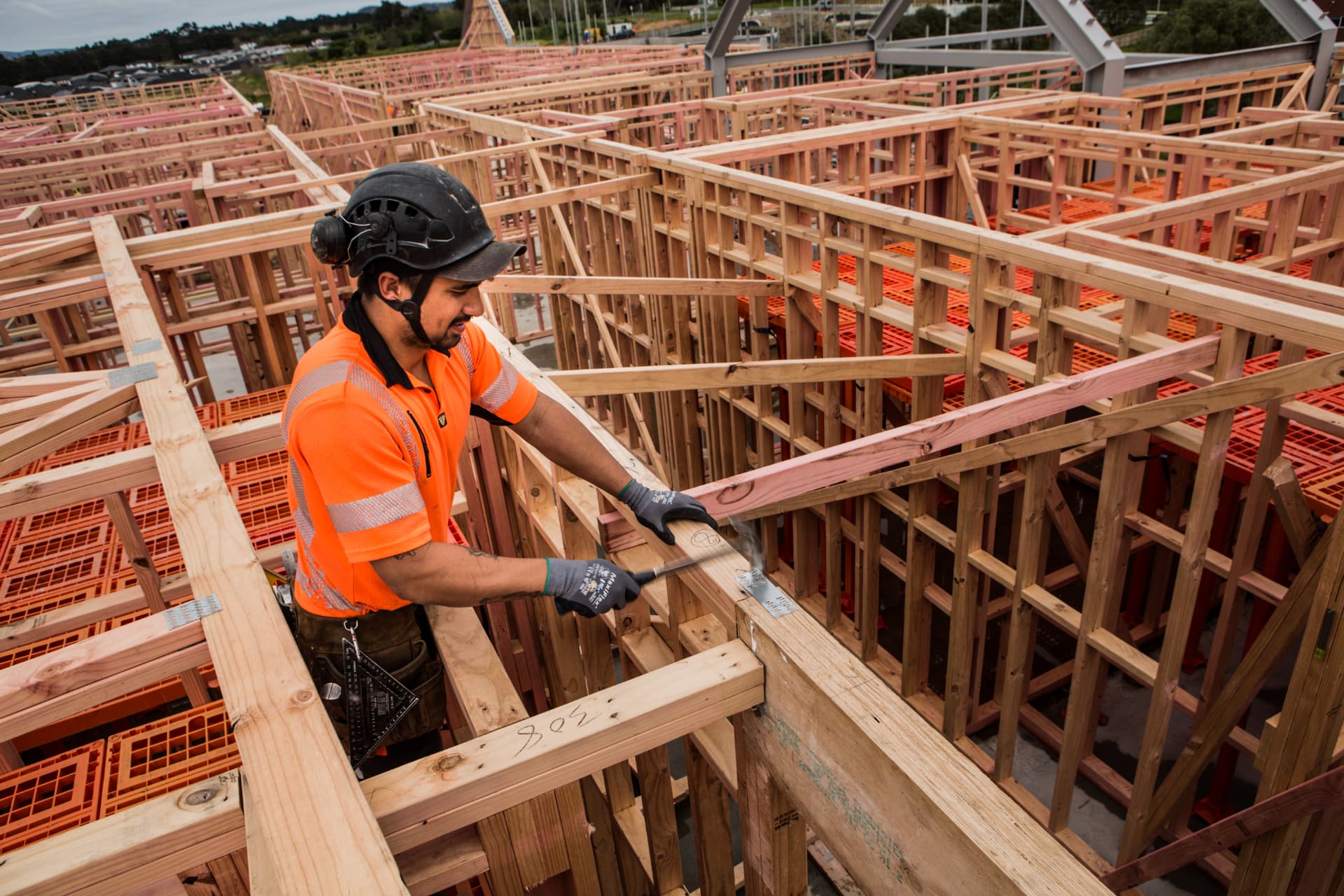
The rules are changing. The Health and Safety at Work Amendment Bill is before Parliament, and MBIE has consulted on the Work at Height regulations. This page sets out what is being proposed, what we have put on the record, and what twenty years of doing it differently has produced in the United Kingdom.
We have a commercial interest in this subject and we are not going to pretend otherwise. What follows is sourced and referenced so you can check it.
Working at heights regulations in NZ: what applies now
Work at height is governed today by the Health and Safety at Work Act 2015 and the Health and Safety at Work (General Risk and Workplace Management) Regulations 2016. WorkSafe's guidance is plain: “Under HSWA you must manage fall risks from any height.” There is no minimum height threshold, and WorkSafe describes the belief that falls under 3 metres need no controls as “dangerous and incorrect”.
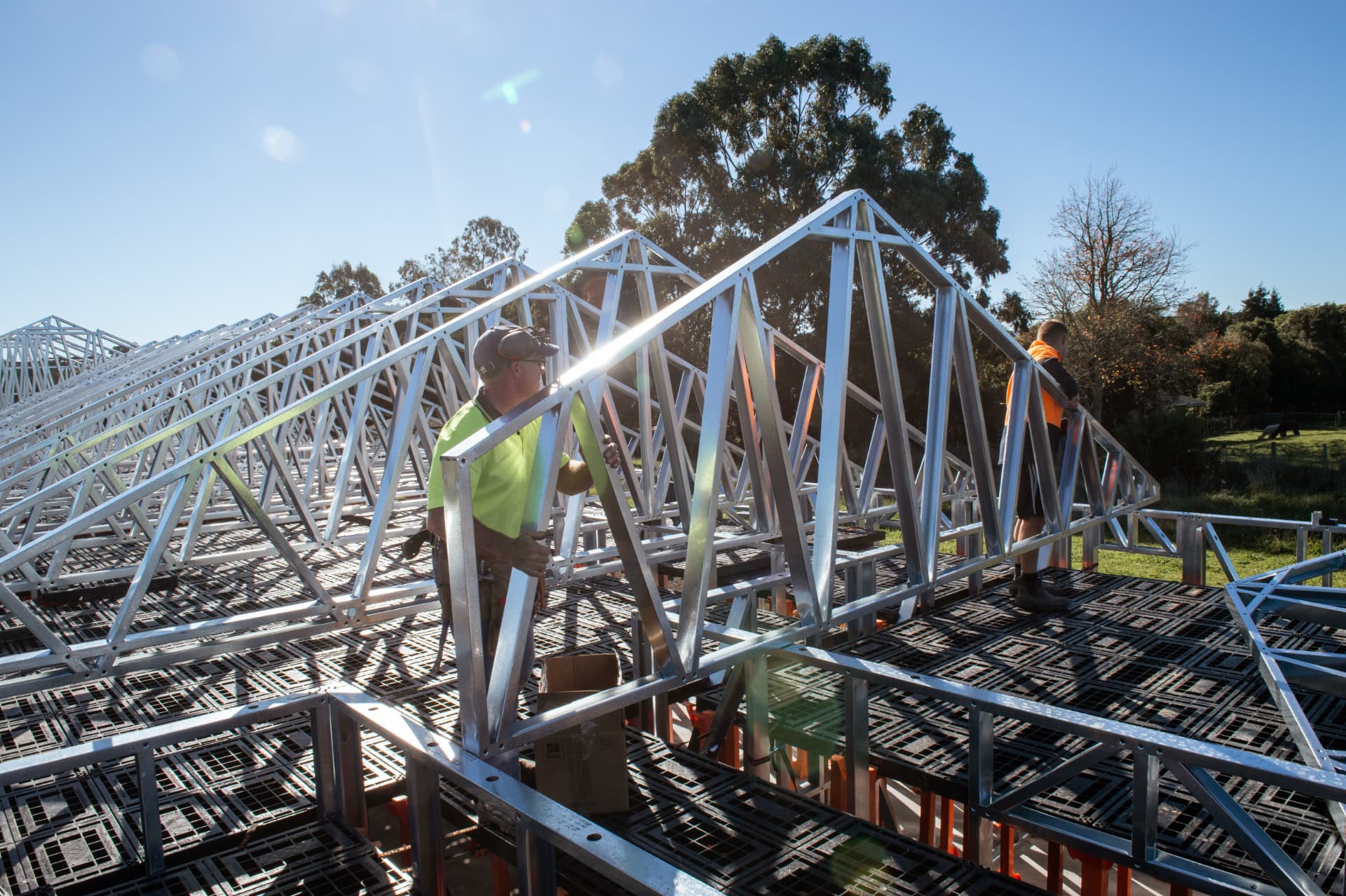
WorkSafe also states that edge protection and scaffolding are “strongly preferred over harness-based systems”, and that PPE is the last line of defence.
Fall risks are managed in the order set by the hierarchy of controls — see where a working platform sits in it.
What is changing, and what it may mean on site
Two processes are running at once. The Health and Safety at Work Amendment Bill is progressing through Parliament, and MBIE has consulted on reform of the regulations covering plant, structures and hazardous work — including work at height.
The Bill amends the primary legislation that governs how health and safety duties work in New Zealand. Workdek made a submission to the select committee in March 2026.
MBIE consulted in April 2026 on proposed changes to the regulations covering work at height. Workdek responded in May 2026, providing evidence on how working platforms are used in the United Kingdom and what the UK regulatory framework has produced.
The question at the centre of it is whether the regulations state a mandatory sequence — requiring collective prevention to be considered and applied before measures that act after a fall — or leave the choice of control to individual judgement. The United Kingdom answered that question in 2005, and what its framework says is set out below.
Nothing in the current rules requires you to wait for the outcome of these processes. The hierarchy of controls already applies, and it already asks whether a fall could have been prevented before asking how it would be arrested.
The practical step available today is to document that question honestly on each job — what was considered, what was reasonably practicable, and why the chosen control was chosen. That is good practice under the current rules and it will not be wasted work under whatever comes next.
What we have put on the record
Submission on the Health and Safety at Work Amendment Bill, March 2026, to the select committee. Our central recommendation was that falls from height above 1.3 metres be formally classified as a critical risk in residential construction. The reasoning is in the WorkSafe data. More than half of falls are from under three metres, and around seventy per cent involve ladders and roofs. The serious harm in residential construction is not happening at extreme height during unusual work. It is happening during ordinary tasks, at heights people have stopped treating as dangerous.
Response to MBIE on international practice, May 2026. MBIE asked us what we knew about how products like Workdek are used overseas. We provided evidence on the United Kingdom: the Work at Height Regulations 2005 and their mandatory hierarchy, the FASET competency framework, and the adoption of platform decking across UK volume housebuilding.
We have also worked with Golden Homes on their submission on the Amendment Bill, and on their SafeGuard Awards entry documenting what happened when they changed their method statements across a national licensee network.
- Submission — Health and Safety at Work Amendment Bill
Workdek's submission to the select committee considering the Bill.
PDF · 104 KB
The UK framework
The United Kingdom faced the same problem New Zealand has now. Falls from height had been the leading cause of workplace death for decades, and the rules were a patchwork. The Work at Height Regulations 2005 came into force in April 2005, replacing a fragmented set of earlier instruments that were widely criticised for leaving protection gaps. The regulations apply wherever there is a risk of falling a distance liable to cause injury. There is no minimum height threshold — the operative test is the risk of injury, not the height of the drop.
Regulation 6 sets a hierarchy that must be followed in strict sequence, and Regulation 6(5) states explicitly that employers must give collective protection measures priority over personal protection measures. Schedule 3 deals specifically with working platforms, setting requirements for dimensions, stability, strength and edge protection, and requiring inspection by a competent person at intervals not exceeding seven days in construction.
Duties sit with employers, the self-employed, and any person who controls the work of others at height. Alongside them, the Construction (Design and Management) Regulations 2015 assign overarching responsibility to the Principal Contractor. No party can pass responsibility down the supply chain and be finished with it. The practical effect has been to drive working platform adoption into the procurement chain.
What the numbers show
Attributing a change in fatality rates to a single regulation is not straightforward, and we are not going to overstate it. What is on the public record is this:
- Between 1990 and 2010, workplace fatal injuries in Great Britain fell by approximately 68% — a period that included the introduction of increasingly stringent height safety requirements.
- RoSPA analysis of 1990 to 2022 shows total workplace fatalities falling by more than 70%, with the steepest reduction in the 1990–2010 period.
- HSE data shows the construction fatality rate falling substantially over the same period, from rates many times higher in the 1980s.
UK industry bodies and safety professionals credit the 2005 regulations with a step-change in how employers approach height risk — a move from compliance-focused thinking to genuine risk management.
What it produced, and the lesson
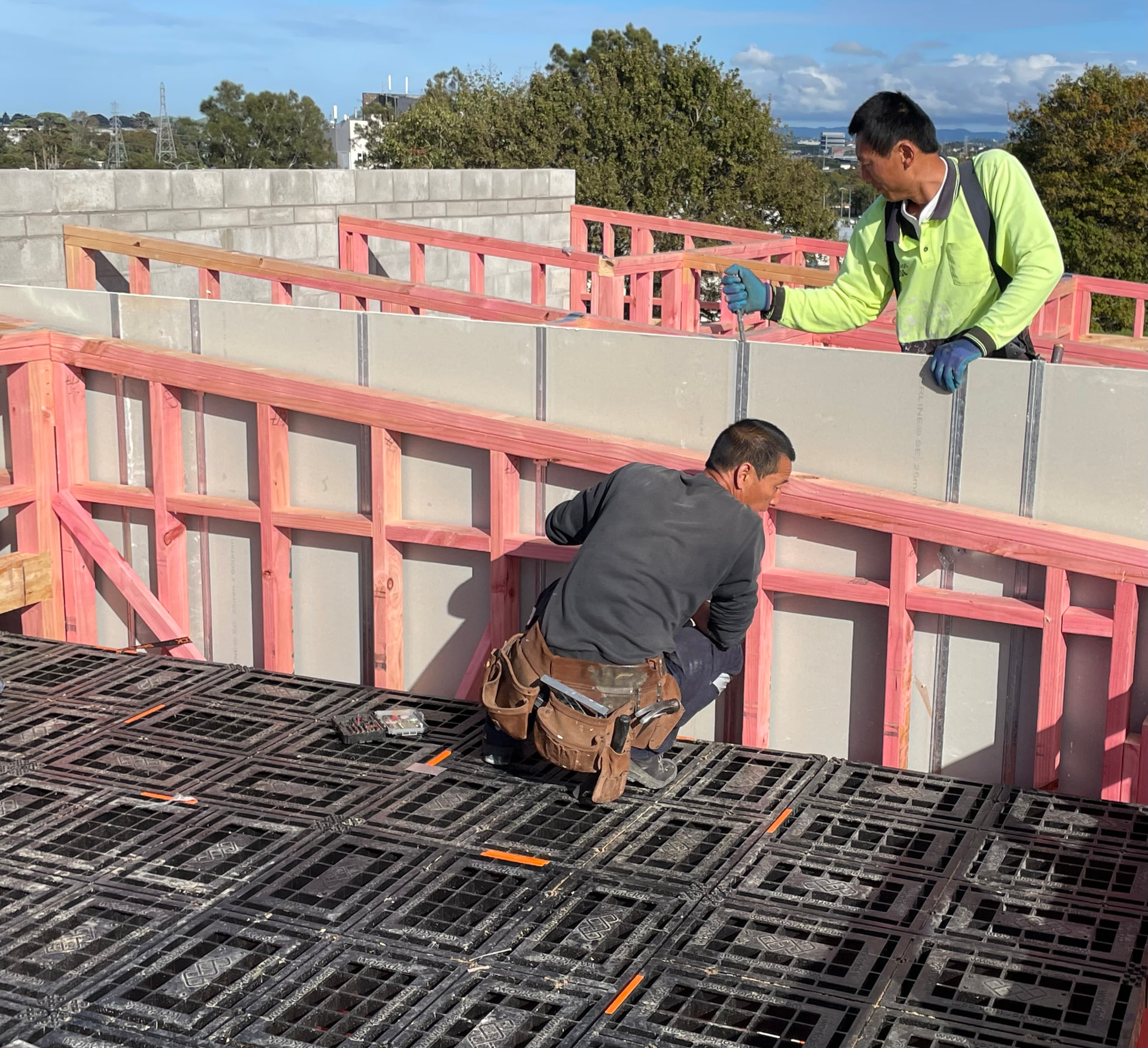
Platform decking is embedded in standard site safety methodology and procurement requirements across the major UK housebuilders, who between them deliver the bulk of new homes in the country.
- Taylor Wimpey uses G&M Safe Deck's Modular Access Platform system across its sites, with dedicated installation training produced in partnership with the manufacturer.
- Persimmon Homes uses MacDeck extensively across all its residential sites nationally, branded specifically for Persimmon, having transitioned from fall arrest bags to collective protection as the primary solution.
- Story Homes and other regional housebuilders have adopted branded platform decking systems as standard.
- There are now at least eight manufacturers supplying FASET-approved platform decking to the UK market — a measure of how mature that demand has become.
The training framework that grew with it
FASET is the trade association and training body for the safety netting and temporary safety systems industry in the UK, and the primary body for competency standards and CSCS card endorsement for working at height systems including platform decking. It sets competency standards for installation and site management, delivers and certifies training through approved centres, issues manufacturer-specific CSCS Blue Cards to qualified installers, audits member companies annually against SSIP standards, trains more than 1,000 candidates a year, and has over 65 audited member companies.
The lesson, stated plainly
New Zealand residential construction presents the same building typologies, and the same floor-to-floor constraints, as the UK housing stock where platform decking became standard.
The UK experience suggests that making collective protection available in legislation is not sufficient on its own. What changed practice was mandatory sequencing — a requirement to consider and apply collective protection before turning to personal protection.
If New Zealand's reformed regulations include a similar mandatory hierarchy, the likely market response is the UK pattern: wider adoption, a domestic supply chain, investment in training infrastructure, and better outcomes on site.
Sources: UK Work at Height Regulations 2005; CDM 2015; HSE statistics; RoSPA analysis; FASET. Full referencing in the MBIE response document.
PCBU duties for work at height
If you run one site, fall protection is a decision. If you run a network of sites, teams or licensees, it is a system — and the failure modes are different.
Where each site chooses its own approach, three things tend to happen. Practice varies. The cheapest option becomes the default. And the organisation carries the risk of decisions it did not make and cannot see.
A PCBU that recognises a persistent risk and leaves individual sites to solve it independently has not discharged much. Scale and influence are exactly what allows the question to be answered once, properly.
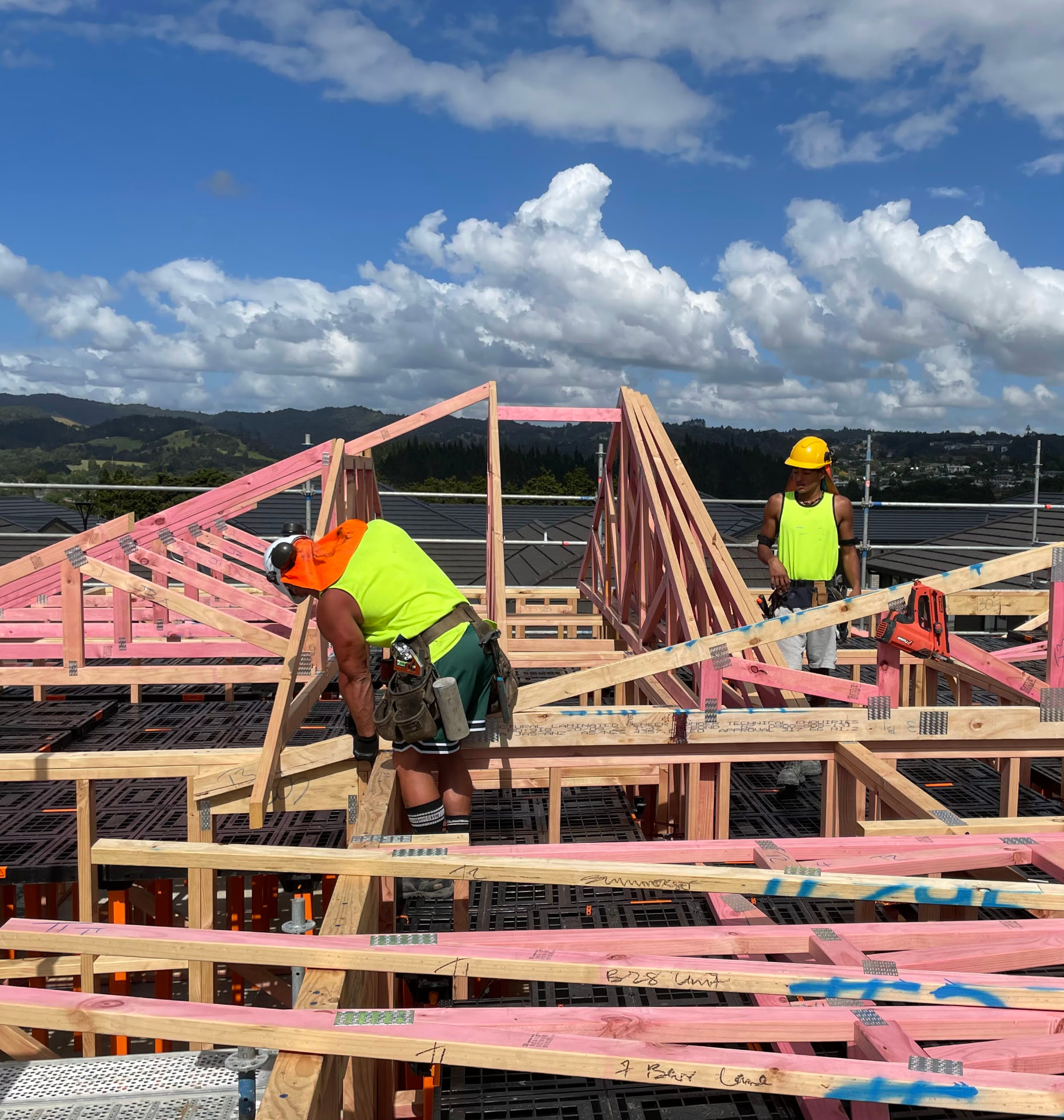
Golden Homes, a national residential builder, identified falls from height as a persistent risk, tested an alternative on live sites, assessed its practical impact on crews and workflow, embedded it into method statements, and then identified auditing as the next step to keep it embedded. That sequence — recognise, test, decide, embed, verify — is the useful part, and it applies regardless of which control you land on.
What a PCBU can actually do
- Test in a live operating environment, not in a demonstration. A trial on a real site with real crews under real programme pressure tells you what a supplier presentation cannot.
- Assess the effect on workflow, not only on risk. A control that slows the work down will be worked around. One that improves the work spreads on its own.
- Write the outcome into method statements. Until it is in the method, it is a preference.
- Verify that it stays embedded. Rollout is not implementation. A regular audit process is what tells you whether the change survived contact with the programme.
- Feed site learning back. Golden Homes identified refinements through use — lowering braces, improving handling — that would not have surfaced from an office.
Workdek on New Zealand sites our work.
Don't forget the Roofers
One of the questions that comes up is: what happens if a roofer has a fall and lands on the safety decking? It is a good question, and it has an easy answer — follow the hierarchy of controls.
Stop thinking about people falling and ask: how can I prevent the fall from happening in the first place?
For roofers and builders, WorkSafe has published guidance on exactly this. The Best Practice Guidelines for Working on Roofs cover it in section 4, eliminating falls through design: spacing roof purlins at 450mm centres instead of the standard 900mm, or placing safety mesh as noted in section 7.7. The full guidelines are below.
- WorkSafe — Best Practice Guidelines for Working on Roofs
WorkSafe New Zealand's best practice guidelines for working on roofs, including section 4 on eliminating falls through design and section 7.7 on safety mesh.
PDF · 2.2 MB
Questions worth asking any installation supplier
- Where does this product sit in the hierarchy of controls, and can you demonstrate it?
- What independent testing has the product been through, and can I see the results?
- What certification does the product hold, and to which standard?
- What does the product do to task duration and man-hours — measured, not estimated?
- Who installs it, who inspects it, and who is responsible while it is on my site?
- What happens when the structure changes mid-build?
- What training do your installers hold?
Last reviewed: 1 October 2026.
Tell us about your build.
Talk to us directly. We would rather answer a question than have it guessed at.